"The greatest anxiety comes from the invisible and intangible—you can only wait," said Professor. Sun Yun, Vice President of Renji Hospital, Shanghai Jiao Tong University School of Medicine and Deputy Director of the Shanghai Key Laboratory for Assisted Reproduction and Reproductive Genetics.
"In the past, patients could only wait for the doctor to notify them after oocyte retrieval. Now, using blockchain technology, we’ve made embryo development 'visible'—parents can witness the entire process of their embryo growing from a single cell to a blastocyst in real-time on their phones."
"IVF has been around for over 40 years, but we are far from solving all its challenges," Professor Sun added. "Our goal is to improve success rates, reduce birth defects, and help more families achieve healthy births."
From IVF to personalized precision treatment, from AI-assisted diagnosis to cutting-edge genetic screening, the lab is using technology to bring new hope to families.
Blockchain Opens a 'Transparent Window' in IVF: A Technological Breakthrough For those undergoing IVF, the hardest part is the waiting.
In the traditional IVF process, after oocyte retrieval, embryos are cultured in the lab for five days before the doctor selects the best one for transfer. During this time, patients have no insight into their embryo’s development—they can only wait for the final result, in anxious and helpless.
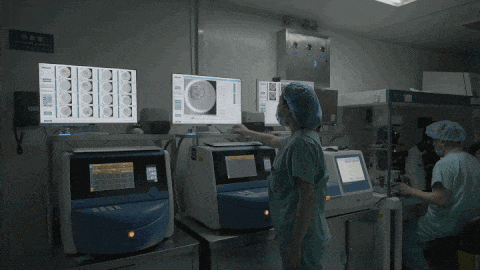
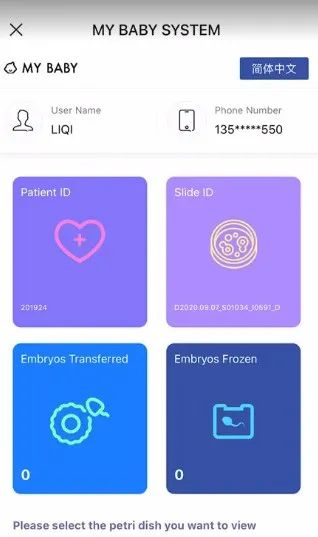
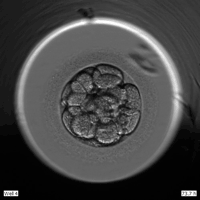
"These five days are like opening a blind box," said professor Sun. "That’s why we pioneered the integration of time-lapse embryo imaging with blockchain technology, developing the MyBaby Smart Reproductive Medicine Project—allowing patients to track their embryo’s growth in real-time and see every change happening in the lab."
On one hand, MyBaby achieves full visualization and traceability of embryo development, making lab quality control transparent. This creates a value-driven, emotionally supportive platform, helping patients with implantation issues build an early emotional bond with their embryo and boosting their confidence in treatment success.
On the other hand, by combining time-lapse imaging, embryo development parameters, and lab environmental data, the system establishes a new embryo evaluation standard, laying the foundation for AI-powered embryo grading and improving treatment quality for implantation disorders.
"In the past, patients often misunderstood the process due to lack of transparency—some even worried the lab might 'lose' their embryo," professor Sun said. Now, with MyBaby, parents can witness their baby’s journey from a single cell, while doctors’ procedures become more precise and transparent.
Beyond embryo visualization, another major challenge in reproductive medicine is implantation failure. "Why do some seemingly healthy embryos fail to implant?" Dr. Sun pointed out. To solve this, the lab developed an artificial uterine model, simulating the embryo-endometrium interaction to identify key signals for successful implantation.
"IVF is not a game of chance—it’s a precision science," emphasized professor Sun.
The lab also employs AI-based embryo morphology analysis, creating an embryo quality assessment model to minimize human error and help doctors select the most viable embryos with greater accuracy.