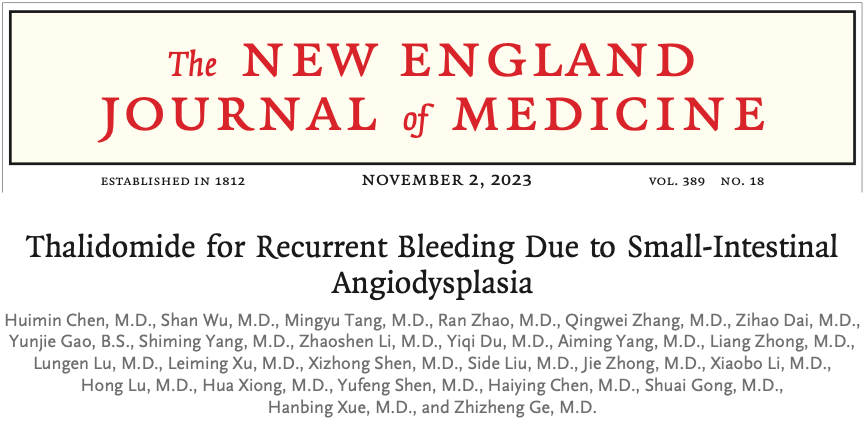
Shanghai's Renji Hospital has made medical history with its pioneering study on small intestinal bleeding published in The New England Journal of Medicine - marking the first time a Chinese gastroenterology original research article appears in this prestigious journal.
Led by Professor Ge Zhizheng and Dr. Chen Huimin from Renji Hospital's Gastroenterology Department, this investigator-initiated prospective multicenter randomized double-blind placebo-controlled trial demonstrates thalidomide's remarkable efficacy in treating recurrent small intestinal angiodysplasia bleeding - a potentially life-threatening condition long challenging clinicians worldwide.
The Hidden Danger of Vascular Malformations
"Gastrointestinal angiodysplasia (GIA) can occur throughout the digestive tract," explains corresponding author Professor Zhizheng Ge, Chief Specialist at Renji Hospital. "Patients typically experience recurrent occult bleeding from multiple, elusive lesions that frequently reappear."
The condition creates tremendous clinical challenges:
● 50% of GIA patients require repeated hospitalizations
● Many depend on blood transfusions for survival
● Severely impacts quality of life and work capacity
● Creates heavy psychological and financial burdens
● Addressing an Unmet Medical Need
Accounting for 5-10% of all GI bleeding cases (particularly in elderly patients), recurrent small intestinal bleeding currently lacks:
● Standardized effective treatments
● Safe pharmaceutical interventions
While somatostatin shows promise in observational studies, robust clinical evidence has been missing. Invasive options like embolization or surgery often prove unsuitable, creating urgent global demand for effective medical therapy.
This landmark study features:
● First prospective RCT evaluating thalidomide for small intestinal vascular malformation bleeding
● Highest evidence-level randomized controlled design
● Unique focus on sustained post-treatment efficacy
● Primary endpoint comparing 1-year follow-up outcomes with baseline
● Practice-Changing Implications
The findings:
● Fill a critical therapeutic gap
● Avoid long-term medication side effects
● Improve treatment compliance
● May lead to international guideline revisions
"This could transform clinical practice by providing the first evidence-based medical solution," notes Professor Ge. The research team continues monitoring long-term outcomes while exploring optimal dosing strategies.