Non-alcoholic fatty liver disease (NAFLD), affecting 30% of the population in China, significantly elevates the risk of major cardiovascular and chronic diseases. However, clinical treatments for NAFLD remain limited. Recently, a research team led by Prof. Pu Jun from the Department of Cardiology at Renji Hospital, Shanghai Jiao Tong University School of Medicine, published groundbreaking findings in Cell Metabolism, exploring the therapeutic potential of remote ischemic conditioning (RIC) in metabolic disorders. Their study revealed that RIC technology significantly improves lipid metabolism dysregulation, offering a novel strategy for NAFLD management.
RIC, a non-invasive technique, was previously shown in clinical trials (ChiCTR2000038649) to enhance microcirculation in ischemic cardiovascular diseases. Building on this, the team analyzed data and discovered that chronic RIC treatment markedly reduces liver fat content. Further validation in multiple NAFLD models demonstrated RIC’s efficacy in alleviating pathological features, including hepatic steatosis, inflammatory cell infiltration, and fibrosis. Mechanistic studies revealed that RIC modifies small RNA expression in muscle tissue, which is transported to the liver via myogenic extracellular vesicles. This process activates hepatic fatty acid breakdown pathways while suppressing inflammatory and cell-damaging pathways, ultimately mitigating NAFLD progression.
This pioneering study highlights RIC’s therapeutic potential for metabolic diseases, particularly NAFLD. Notably, RIC is simple to administer, clinically safe, and suitable for community-wide adoption, positioning it as a low-cost, scalable strategy for metabolic disease prevention and control.
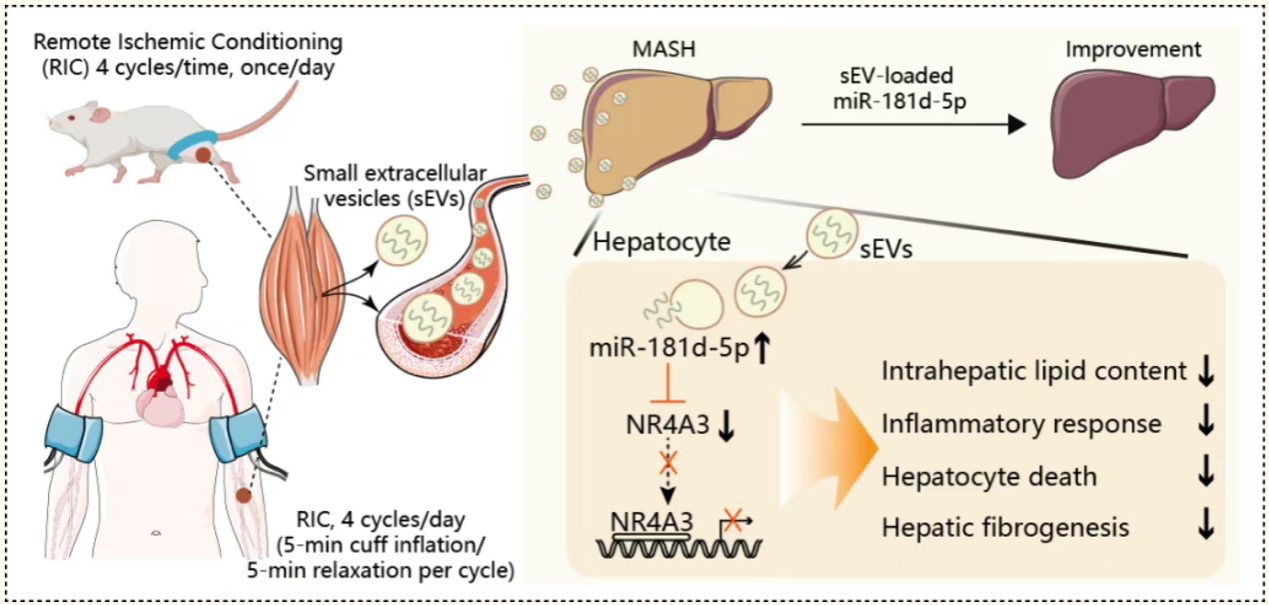
Published in Cell Metabolism, this research opens new avenues for addressing the global burden of metabolic disorders through innovative, non-invasive interventions.