Clinical and Research Team for Gastrointestinal Tumors led by Professor Jing-Yuan Fang from Renji Hospital, School of Medicine, Shanghai Jiao Tong University, in collaboration with seven hospitals across the country, has recently confirmed that berberine, a common traditional Chinese medicine, can continuously reduce the risk of colorectal adenoma recurrence for 6-8 years after withdrawal, providing a long-acting chemoprevention regimen for colorectal cancer prevention.
Colorectal cancer is a highly prevalent cancer globally, with 90% originating from adenomatous polyps. The recurrence rate after adenoma resection is still high, and there is a lack of safe and affordable preventive drugs internationally.
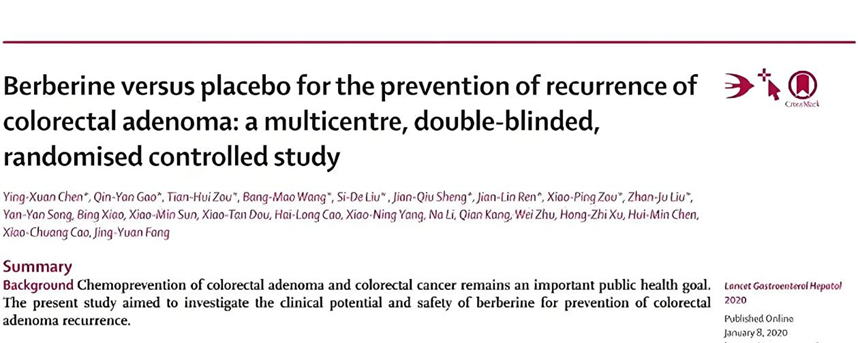
The research was conducted in two phases. The first-phase multicenter randomized double-blind trial, published in 2020 (The Lancet Gastroenterology & Hepatology 2020, with expert contemporaneous commentary, and this has been cited in clinical guidelines), showed that among 891 patients who underwent adenoma resection and took berberine for two years, the risk of adenoma recurrence decreased by 23%, and the risk of advanced adenomas decreased by 37%. There were no serious adverse reactions. In the second phase, a median 78 month follow-up of 648 patients revealed that 6-8 years after withdrawal, the adenoma recurrence rate decreased by 33%, and the adenoma-free survival period in the berberine group was significantly prolonged.
Berberine is safe, inexpensive, and easily accessible. Its long-lasting protective effect and safety properties have now been confirmed, which may provide a new option for high-risk populations worldwide and have the potential to reshape colorectal cancer prevention strategy.