A 59-year-old man named Mr. Li suffered from severe lower back pain. A medical check revealed hydronephrosis (swelling of the kidney) caused by ureteral stricture.
Experts from the Urinary Tract Reconstruction Subspecialty Group of the Urology Department at Renji Hospital, School of Medicine, Shanghai Jiao Tong University, performed a high-difficulty surgery with the assistance of a robotic system, "reconstructing" the ureter, preserving renal function to the greatest extent, and with only 10ml of intraoperative blood loss.
Hydronephrosis Caused by a "Blocked Ureter"
Mr. Li had long been troubled by kidney stones and had undergone extracorporeal shock wave lithotripsy. Four months ago, he suddenly experienced severe lower back pain and soreness. A CT scan at the hospital showed hydronephrosis in the right kidney, right ureteral stones, and kidney stones. Therefore, the local hospital performed ureteral holmium laser lithotripsy for Mr. Li, during which a right ureteral stricture was found.
After the operation, the hydronephrosis did not improve, so Mr. Li underwent nephrostomy at the local hospital. A post-fistulization angiogram showed complete obliteration of the ureteral stricture at the renal hilum.
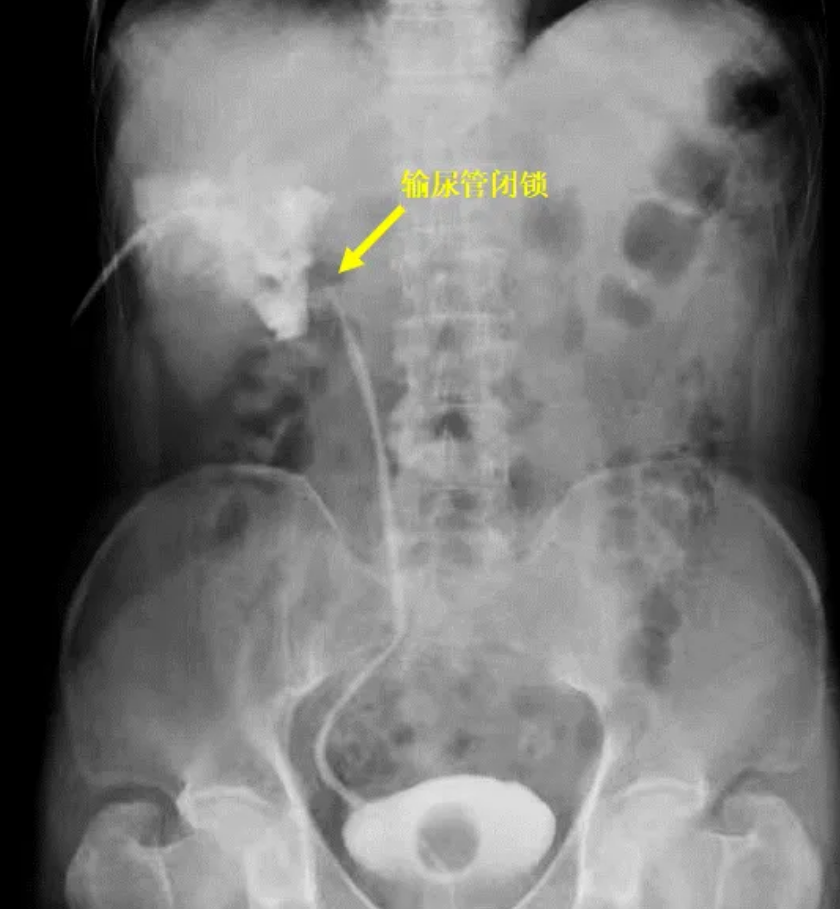
Was he destined to live with a fistula for the rest of his life? Unwilling to accept this, Mr. Li learned that the urinary tract reconstruction team at Renji Hospital had many successful cases in treating ureteral strictures. Recommended by fellow patients, he came to Renji Hospital for treatment.
"The ureter is the urinary channel connecting the kidney and the bladder. When the ureteral lumen narrows compared to normal due to various causes, it blocks urine flow, causing upper urinary tract obstruction, hydronephrosis, and renal function damage. Any condition that leads to poor ureteral drainage and lumen narrowing is called ureteral stricture, " explained Dr. Lv Xiangguo, Attending physician of Urology Department of Renji Hospital. He added that since ureteral stricture can be caused by many factors, its treatment is also affected by multiple factors. Clinically, there is a lack of uniform treatment standards. Therefore, comprehensive evaluation of multiple factors and individualized treatment for patients are the keys to overcoming this disease.
Robotic Surgery Helps "Reconstruct" the Ureter
"Mr. Li has an intrarenal renal pelvis located within the renal parenchyma, and the completely obliterated part is at the renal hilum, making simple pyeloureteral anastomosis impossible, " said Dr. Lv Xiangguo. predicting the high difficulty of the surgery before the operation. In the past, such patients could only undergo permanent nephrostomy, which affects the quality of life. However, considering that the patient was still relatively young, had good renal function, and could not accept permanent fistulization, the team needed a better solution.
After repeated discussions, Lv Xiangguo developed an individualized surgical plan for Mr. Li: "inferior pole nephrectomy + infundibulureteral anastomosis" to restore ureteral patency.
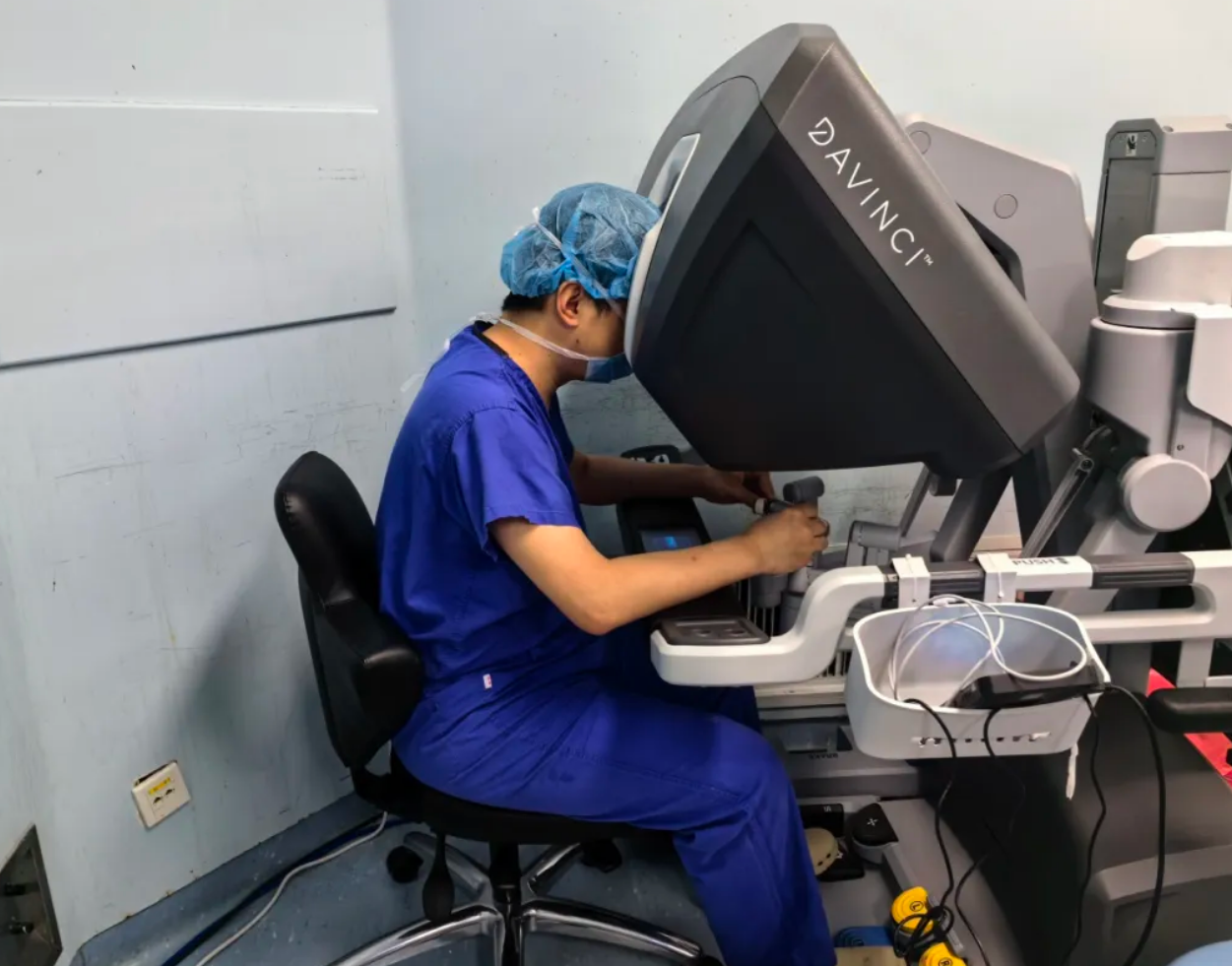
In the past, many such patients had severe hydronephrosis and thin renal parenchyma, so inferior pole nephrectomy caused less bleeding. However, Mr. Li's renal parenchyma was basically normal. If the inferior pole were resected rashly, it would inevitably cause more intraoperative bleeding. Through Mr. Li's renal CTA (computed tomography angiography), the doctors found that his kidney had a branch artery supplying the inferior pole. If this blood vessel could be accurately located and blocked, it would reduce surgical trauma and complications.
On the day of the operation, after repeated discussions and thorough preoperative preparations, Lv Xiangguo performed superselective renal artery occlusion for inferior pole resection. They accurately located the renal artery branch in the area of the inferior pole to be resected, temporarily blocked the single blood vessel, locally interrupted blood flow, maximally protected normal tissues, and reduced surgical trauma and complications. While protecting renal function, they effectively solved the stricture problem. With exquisite surgical skills and the precise assistance of the robotic system, the operation proceeded smoothly, with only 10ml of blood loss.
Mr. Li recovered well after the operation and could get out of bed the next day.
According to Dr.Lv, laparoscopic minimally invasive surgery with robotic assistance has greatly reduced surgical risks and enabled more precise treatment, providing new ideas and methods for the treatment of similar patients and bringing hope to more patients in need. In the future, Renji Hospital will continue to deepen its exploration in the field of urological urinary tract reconstruction, providing efficient, high-quality medical services, and individualized treatment plans for more patients.