Historically, early screening for gastric cancer has been a challenge, and the technical and economic costs of gastroscopy have determined that this method is not suitable for large-scale screening. Facing this clinical difficult point, Clinical and Research Team for Gastrointestinal Tumors led by Professor Jing-Yuan Fang from Renji Hospital, School of Medicine, Shanghai Jiao Tong University has discovered for the first time that Streptococcus anginosus (Sa) and Streptococcus constellatus (Sc) might become non-invasive biomarkers for early warning and screening of gastric cancer and its precancerous lesions. This important research achievement was published in the renowned academic journal Gastroenterology in 2022. Gastric cancer is one of the malignant tumors with a high incidence rate and mortality rate in the world. Professor Jing-Yuan Fang led the research team to carry out a nationwide multi center retrospective study. Detecting the level of fecal Sa and Sc can be a non-invasive, accurate, sensitive and simple method for early-warning of gastric cancer. At the same time, the technology of Sc detection developed by Fang’s team has been authorized by the national invention patent and has completed the achievement transformation, with widely application in clinical practice.
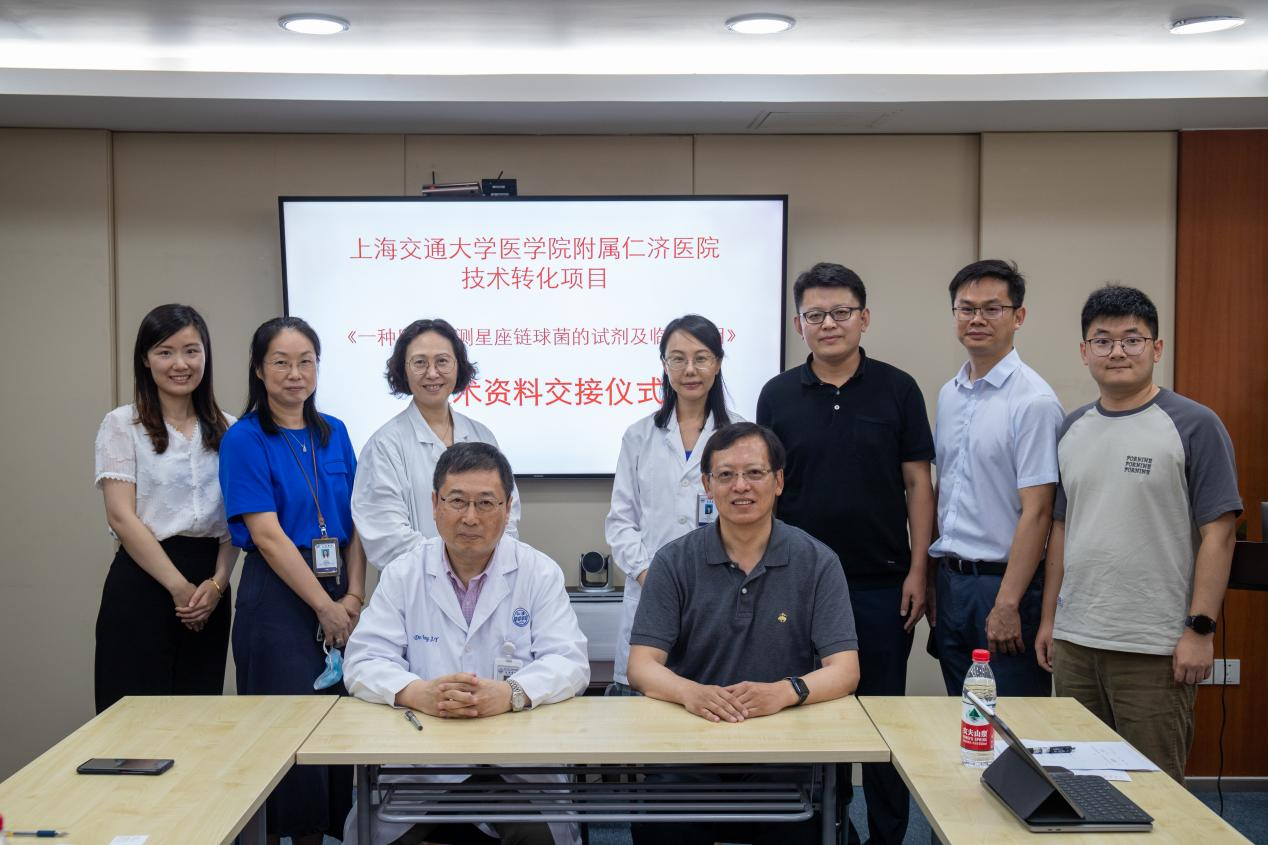
Colorectal cancer (CRC) ranks among the most prevalent malignant tumors globally, and its persistently high incidence poses a substantial burden on global public health. Through multicenter studies, the team led by Professor Jing-Yuan Fang further proved that during early colorectal adenoma stages, fecal abundance of Clostridium symbiosum(C. symbiosum) is significantly higher than in control groups. They emphasize that combining carcinoembryonic antigen (CEA), fecal occult blood tests (FOBT), and C. symbiosum abundance significantly improves early warning efficacy for colorectal tumors. This approach offers high feasibility for widespread implementation—even primary healthcare institutions can utilize such screenings to detect intestinal flora changes early, enabling timely diagnosis of colorectal adenomas. Through multi-cohort clinical studies, animal models, and multi-omics analyses, the team revealed that C. symbiosum acts as a potential driver factor in CRC initiation and progression by producing branched-chain amino acids (BCAAs), modulating host cellular cholesterol metabolism, and subsequently activating the downstream Hedgehog signaling pathway(published in 2024,Cell Host & Microbe). At the same time, the technology of C. symbiosum detection developed by Fang’s team has been also authorized by the national invention patent and has completed the achievement transformation.
They believe that patients can provide only a little fecal sample in the future to screen gastrointestinal tumors non-invasively and sensitively, which will help high-risk patients detect gastrointestinal tumors early and bring good news to more patients.