Advances in medical technology and increased public awareness of early detection have significantly extended survival rates for cancer patients. According to the 2019-2021 China Cancer Survival Statistics released by the National Cancer Center, the five-year survival rate for eight types of cancers in China now exceeds 60%, including thyroid cancer (92.9%), breast cancer (80.9%), testicular cancer (80.7%), bladder cancer (71.5%), prostate cancer (71.1%), kidney cancer (65.2%), uterine corpus cancer (68.1%), and cervical cancer (66.9%).
As cancer survivors live longer, a new challenge has emerged for healthcare providers: how to address their long-term quality of life, with fertility preservation being a top priority.
"A growing number of cancer survivors face fertility concerns," said Professor Sun Yun, Vice President of Renji Hospital, Shanghai Jiao Tong University School of Medicine and Director of Reproductive Medicine Center. "However, both the disease itself and its treatment can cause irreversible damage to fertility. For many survivors, infertility may become one of the most distressing long-term consequences of cancer therapy."
She emphasized that cancer patients should be a key focus of fertility preservation efforts, calling for the establishment of a comprehensive fertility support system tailored to their needs.
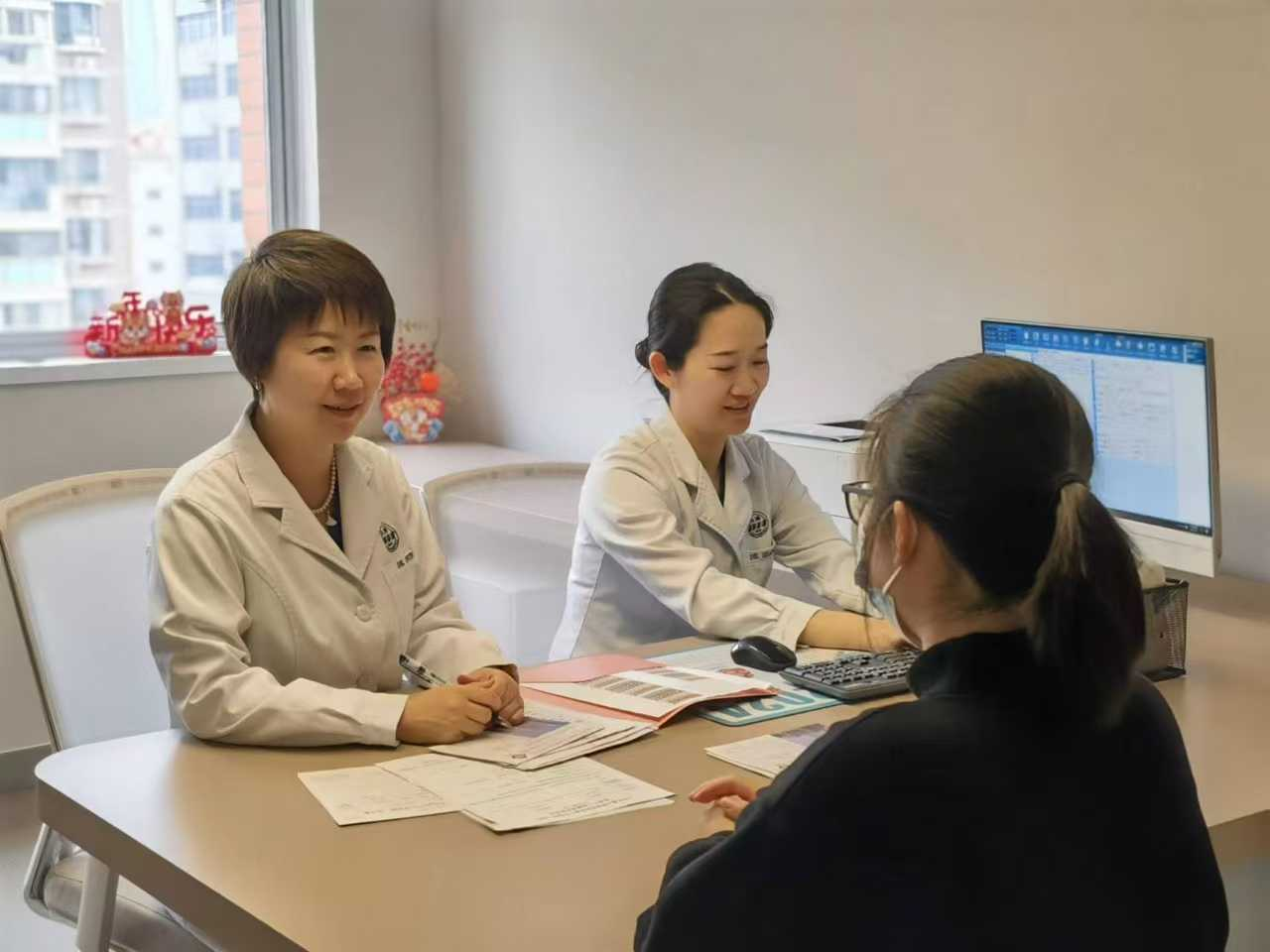
Fertility Preservation Before Cancer Treatment: The Sooner, The Better
In March 2024, China's National Cancer Center released data showing 4.8247 million new cancer cases in 2022, including 2.5339 million males and 2.2908 million females. With rising cancer incidence, increasing numbers of reproductive-age and prepubertal women face fertility threats from cancer treatments.
"Cancer and cancer treatment affecting ovarian function can impair fertility, making proactive preservation essential," stated Professor Sun Yun, emphasizing that fertility preservation aims to maintain reproductive potential for women whose fertility may be compromised by disease or treatment. Common cancers in young women - including breast cancer, cervical cancer, kidney cancer, osteosarcoma and leukemia - often require gonadotoxic treatments like chemotherapy, radiotherapy or bone marrow transplantation, making these patients prime candidates for preservation.
"Embryo and oocyte cryopreservation remain the gold standards. To prevent treatment-induced damage, preservation should begin as early as possible before cancer therapy," professor Sun explained. Chemotherapy and pelvic radiation can rapidly deplete ovarian reserves, damage developing follicles, and potentially cause chromosomal abnormalities. Younger women benefit from greater ovarian reserves, while fertility declines sharply after age 35 with diminishing oocyte quality and quantity.
Embryo and oocyte cryopreservation remain the gold standards for fertility preservation.
Professor Sun Yun introduced that fertility preservation includes oocyte cryopreservation, embryo cryopreservation, and ovarian tissue cryopreservation (OTC) for females, as well as sperm cryopreservation and testicular tissue cryopreservation for males. Prepubertal children can only undergo ovarian tissue cryopreservation or testicular tissue cryopreservation.
Embryo cryopreservation is the most established fertility preservation method and currently has the highest pregnancy rate, with a live birth rate of 41%. Oocyte cryopreservation has become one of the primary fertility preservation methods, with a live birth rate of 32%. For married cancer patients without contraindications to IVF, embryo cryopreservation and transfer are recommended. For women of reproductive age, it is generally advised to freeze 10–20 oocytes or 2–3 embryos to improve pregnancy success rates. Clinically, to avoid delaying subsequent cancer treatments, fertility preservation must be performed promptly before initiating therapy. The 10–15 days required for controlled ovarian stimulation (COS) are crucial. Compared to ovulation induction (OI), which yields only a few mature oocytes per cycle, COS increases the number of oocytes retrieved in a single cycle, making it more suitable for cancer patients.
The ovarian stimulation protocol can be tailored to individual circumstances, including random-start protocols, antagonist protocols, and mild stimulation protocols. Patients with estrogen-sensitive cancers (e.g., breast cancer) often require concurrent letrozole administration to control estrogen levels.
Currently, oocyte and embryo cryopreservation technologies are well-established, with continuously improving survival rates post-thawing, and are widely used in assisted reproductive technology (ART). However, many questions remain in the field of fertility preservation, and most emerging techniques are still in the experimental stage.
Construction of Fertility Support System for Tumor Patients
In recent years, technologies such as oocyte cryopreservation and embryo cryopreservation have gradually matured in China, with continuously improving success rates. The awareness of fertility preservation has increased among the public, and an increasing number of female tumor patients have begun to pay attention to fertility preservation and actively seek related services. Relevant policies and regulations have been gradually improved, providing guarantees for fertility preservation.
However, fertility preservation remains a long-term and challenging task. Professor Sun Yun introduced that both domestic and foreign fertility preservation for women face a contradiction between high willingness for fertility preservation and low acceptance of fertility preservation treatment. In China, this work started relatively late, and a unified and effective practice system has not yet been formed. Therefore, there is an urgent need to establish multidisciplinary collaborative institutions and organizations that can provide consultation and treatment. In addition, there are still deficiencies in standardized management under the supervision of health administrative departments, standardization of indications, technologies and methods for fertility preservation, and standardization of clinical diagnosis and treatment. The awareness of fertility preservation among patients and medical staff also needs to be strengthened, which should be improved through science popularization and training. At the same time, the role of ethical supervision should be fully exerted, and the top-level design of assisted reproduction should be improved, such as maximizing the protection of patients' interests by providing assisted reproduction subsidies.
To solve these problems, further research and practice are needed to improve the efficiency and success rate of fertility preservation.
Facing the chronicization of tumors and an increasing number of patients with fertility needs, Professor Sun Yun believes that on the one hand, early assessment should be done: evaluating the fertility of patients in the early stage of tumor treatment and selecting appropriate preservation methods. On the other hand, multidisciplinary cooperation should be sought: as human understanding of fertility preservation deepens, a multidisciplinary cross-disciplinary field has gradually formed. Fertility preservation no longer relies solely on the reproductive department but requires comprehensive collaboration among internal medicine, surgery, gynecology and obstetrics, radiotherapy, chemotherapy, endocrinology, nursing, genetics, psychology, law, and ethics to comprehensively assess treatment plans, infertility risks, and fertility preservation plans. Therefore, the fertility preservation MDT (Multidisciplinary Team) came into being, which is very important and necessary. This requires cooperation between the reproductive department and the oncology department, reproductive department, and other departments to provide patients with comprehensive treatment. At present, health commissions in many provinces and cities in China have actively established fertility preservation MDT joint clinics. For example, the Health Commission of Zhejiang Province approved the establishment of the Human Fertility Protection and Preservation Center in 2020, and Peking University Third Hospital has also formed a fertility preservation MDT team.
"Our center became the Shanghai Fertility Protection and Reconstruction Center approved by the Shanghai Municipal Health Commission in 2021. Now, four years later, we have cooperated with multiple hospitals such as the Shanghai Cancer Hospital and Children's Hospital to carry out fertility preservation work in the adolescent pre-leukemia patient group and achieved good results," said Professor Sun Yun.
"Fertility preservation for female tumor patients is not only related to their reproductive rights but also to their family happiness and social harmonious development. To solve this problem, the construction of a fertility support system for tumor patients is imperative," pointed out Professor Sun Yun. This system should cover multiple aspects such as fertility assessment, fertility consultation, fertility protection measures, and fertility assistance, and requires joint actions from policies and regulations, academic associations, and enterprises to provide comprehensive fertility support for tumor patients. The ultimate hope is to help female tumor patients overcome cancer while also realizing their dream of childbearing.