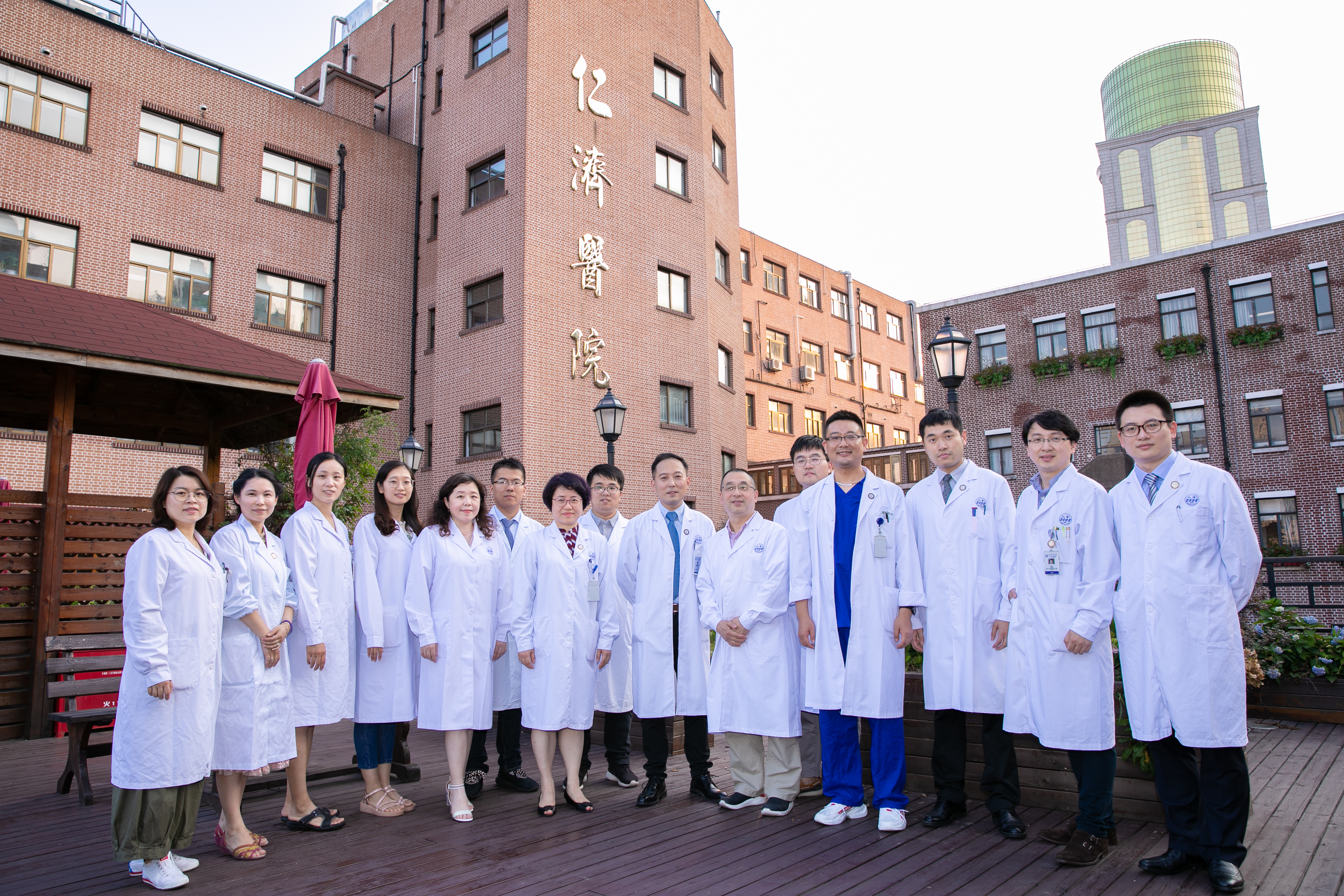
In July 2013, in response to the call for "patient-centered, disease-focused" care, and to implement specialized and refined management principles, Renji Hospital integrated the advantages of otolaryngology-head and neck surgery with general surgery resources, establishing the Department of Head and Neck Surgery with the primary mission of diagnosing and treating diseases of the head and neck. Renji Hospital is one of the earliest hospitals in Shanghai to establish a department of head and neck surgery. The Department of Head and Neck Surgery primarily treats thyroid and parathyroid tumors (including primary/secondary hyperparathyroidism), laryngeal tumors (including benign lesions such as laryngeal polyps and laryngeal cancer), salivary gland tumors, neck soft tissue tumors, and other diseases. The department currently comprises 16 physicians, including 3 chief physicians and 2 associate chief physicians. Most of the physicians in the department have more than one year of overseas exchange experience and maintain good clinical and research collaborations with many leading departments in Europe and the United States. Following the principle of "going out and inviting in," many physicians in the department have presented their research findings at international conferences and regularly participate in organizing international academic conferences in China to exchange cutting-edge concepts in the diagnosis and treatment of head and neck tumors.
In June 2022, the department relocated from the West Campus of Renji Hospital to the 11th floor outpatient department of the East Campus to further tap into its potential. Established for less than a decade, the department has published over 70 domestic and international papers (including nearly 40 SCI papers) and has undertaken and completed nearly 10 national, municipal, and bureau-level projects.
The annual surgical volume of the Department of Head and Neck Surgery has steadily increased, currently exceeding 3,000 procedures per year. Among them, the quality of surgery for malignant thyroid tumors, a key disease category in Shanghai, consistently ranks among the top three in comprehensive hospitals across the city. Noteworthy procedures in the department include approximately 120 surgeries annually for primary/secondary hyperparathyroidism and over 100 annual surgeries for endoscopic thyroidectomy. The department also performs nearly 100 surgeries for various benign and malignant tumors of the throat and larynx. The department's surgical treatment of thyroid tumors has reached a leading level in Shanghai, with parathyroid tumor surgery achieving the top position citywide.
Since its inception, the Department of Head and Neck Surgery has advocated for patient-centered care, conducting multidisciplinary case discussions and academic exchanges with relevant clinical departments. Collaborating horizontally with experts from sister departments such as nuclear medicine, ultrasound medicine, endocrinology, nephrology, thoracic surgery, radiation oncology, and oncology, the department conducts annual educational campaigns, lectures, and clinics for thyroid and parathyroid diseases, earning widespread recognition and appreciation from patients and their families. With strong support from hospital leadership, the department established the first Multidisciplinary Treatment Center (MDT) for thyroid and parathyroid diseases. Employing a multidisciplinary approach, the center optimizes diagnosis and treatment procedures, successfully managing numerous challenging and critical cases and earning positive patient feedback. Additionally, collaborative efforts with ultrasound and laboratory departments for preoperative fine-needle aspiration and BRAF gene testing for thyroid cancer have established a standardized clinical assessment and management system for thyroid nodules based on morphology, function, pathology, and genetics. Moreover, consensus on the diagnosis and treatment of parathyroid tumors within the hospital has significantly reduced perioperative mortality rates for parathyroid tumors, particularly secondary hyperparathyroidism.