Mr. Liu (pseudonym), a 79-year-old Italian-Chinese man, discovered suspicious gastric lesions during a routine checkup in China. Left untreated, these could have developed into cancer. After consulting multiple Shanghai hospitals, he chose Renji Hospital’s Gastroenterology Department. Following an endoscopic submucosal dissection (ESD), he recovered smoothly and returned to Italy.
"Given his age, we opted for ESD—a precise technique to remove abnormal tissue while preserving the stomach. This minimizes organ damage and maintains quality of life," explained Dr. Xiaobo Li, Director of the Endoscopy Center.
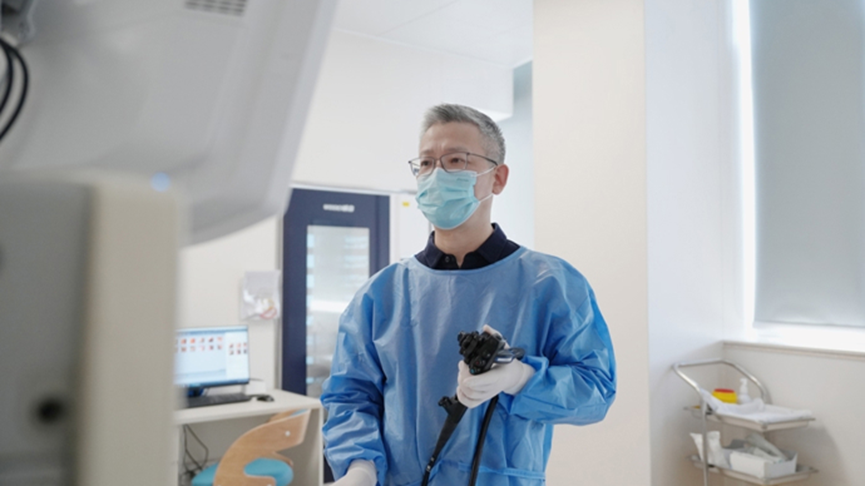
ESD is primarily used for early-stage gastric, esophageal, and colorectal cancers, as well as precancerous lesions. It allows complete removal of large, superficial tumors in one procedure, with faster recovery and fewer complications than surgery. However, it demands high technical skill.
The procedure involves inserting an endoscope through the mouth or anus to locate and remove tumors—leaving no external scars ("ultra-minimally invasive"). Beyond cancer, it can eliminate risks like gastric polyps, dysplasia, and colon adenomas.
Most early digestive cancers show no obvious symptoms. Early diagnosis and treatment are critical, endoscopy provides direct visualization of lesions and allows biopsies. Combined with pathology, it’s the gold standard for cancer screening.